
New York, United States - September 26, 2026 - Iran possesses one of the world's longest and most influential civilizational histories, with cultural traditions extending across thousands of years. From the monumental achievements of the Achaemenid Empire to the sophisticated artistic and political traditions of the Parthian and Sasanian periods, the history of Iran has played a central role in shaping the cultural landscape of Western Asia and its connections with the wider ancient world.
An extensive digital exploration by the J. Paul Getty Museum, “Persia: Ancient Iran and the Classical World,” offers an opportunity to examine this remarkable history through art, architecture, archaeology, religion, political history, and cultural exchange. The resource explores ancient Iran's relationship with the Greek and Roman worlds and provides detailed insights into some of the most significant periods and monuments of Iranian civilization.
Ancient Iran and the Persian Empires
Historically known to much of the Western world as Persia, ancient Iran was a major power in Western Asia for more than a millennium. The Getty's exploration focuses particularly on three successive Iranian dynasties: the Achaemenids, Parthians, and Sasanians, whose empires controlled vast territories and brought together peoples with different languages, religions, artistic traditions, and cultural practices.
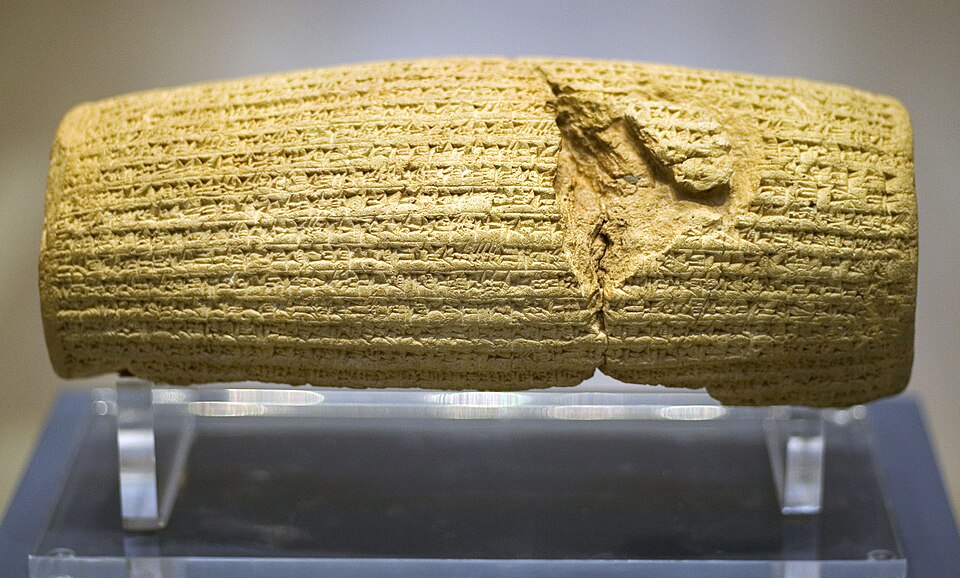
The Achaemenid Empire emerged as one of the most powerful political entities of the ancient world. Cyrus II, better known as Cyrus the Great, expanded Persian authority across Media, Lydia, Babylon, and other territories. Under his successors, including Cambyses II and Darius I, the empire expanded further, eventually encompassing territories extending from northern Greece toward the borders of India.
The scale and diversity of the Achaemenid Empire had a profound impact on its artistic and architectural traditions. Rather than representing a single isolated artistic tradition, Persian imperial art incorporated influences and craftsmanship from numerous regions of the empire.
Persepolis: A Monument to Ancient Persian Civilization
Among the most recognizable symbols of ancient Iran is Persepolis, also known as Takht-e Jamshid.
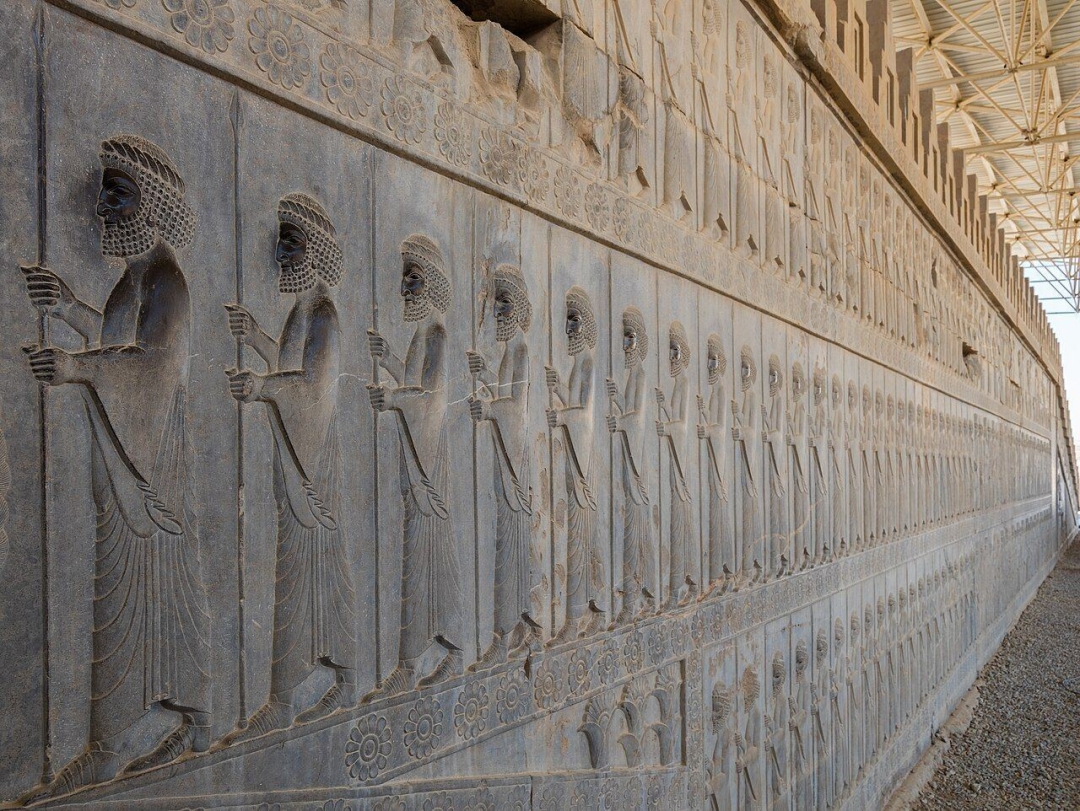
Construction of Persepolis began under Darius I around 518 BC. Conceived as a ceremonial and courtly center, the monumental complex included palaces, treasuries, audience halls, elaborate reliefs, and vast terraces designed to communicate the power and grandeur of the Achaemenid monarchy.
The reliefs of Persepolis are particularly significant. Delegations from different parts of the empire are represented bringing tribute, including Medes, Elamites, Babylonians, Lydians, Egyptians, Greeks, and others. These images provide an extraordinary visual record of the diversity of the Achaemenid world.
The Getty's digital resources also include Persepolis Reimagined, an immersive online experience that reconstructs the ancient ceremonial center and allows visitors to explore its architecture, art, and historical environment digitally.
Susa and the Art of a Multicultural Empire
Persepolis was not the only major center of Achaemenid civilization. Susa, in southwestern Iran, was another important imperial capital and had already been a major center of civilization for thousands of years before becoming part of the Persian Empire.
The palace complex established under Darius I incorporated materials, techniques, and specialist craftsmanship from across the empire. Glazed-brick decorations featured lion-griffins, royal sphinxes, and palace guards, demonstrating the sophisticated artistic traditions that developed through interaction between different regions and cultures.
The architecture and decoration of Susa therefore illustrate an important characteristic of Persian civilization: its ability to bring together diverse artistic traditions within a larger imperial culture.
Art, Luxury, and Royal Power
Ancient Iranian civilization also produced an extraordinary tradition of luxury arts.
Gold and silver vessels, jewelry, seals, coins, ceremonial objects, textiles, and other precious objects served both practical and symbolic purposes. Royal courts used such objects to express authority, wealth, status, diplomacy, and political relationships.
Achaemenid vessels frequently featured elaborate animal forms and mythical creatures, while personal seals could depict kings, warriors, hunting scenes, and encounters between Persians and foreigners. Coins likewise developed as important instruments of political representation and authority.
These surviving objects provide more than evidence of ancient craftsmanship. They offer insight into how Iranian rulers and elites represented themselves and how Persian artistic ideas interacted with traditions from neighboring civilizations.
Iran, Greece, and Rome: Rivalry and Cultural Exchange
The history of ancient Iran cannot be separated from the history of the civilizations surrounding it.
The Achaemenid Persians came into prolonged conflict with Greek states, while later the Parthians and Sasanians became major rivals of Rome. Yet military rivalry existed alongside extensive cultural and artistic exchange.
Greek artists, soldiers, doctors, administrators, and merchants participated in Persian society, while Persian artistic forms influenced the Greek world. Later, Parthian art combined Greek, Mesopotamian, Achaemenid, and nomadic Iranian influences.
The relationship between Iran and the Classical world was therefore considerably more complex than a simple story of conflict. Objects, artistic techniques, religious concepts, luxury goods, languages, and cultural practices moved across political boundaries.
The Parthian Empire
Following the conquest of the Achaemenid Empire by Alexander the Great and the subsequent Seleucid period, Iranian political power was reasserted under the Parthians.
Beginning with Arsaces I around 247 BC, the Arsacid dynasty expanded from northeastern Iran and eventually established control over much of Iran and Mesopotamia. The Parthian Empire became one of the principal powers of the Near East and a major rival of Rome for centuries.
Parthian civilization was characterized by cultural diversity and artistic synthesis. Its art incorporated Iranian traditions alongside Greek, Mesopotamian, and Central Asian influences.
Luxury silver vessels, jewelry, coins, and other objects demonstrate both the wealth of the Parthian aristocracy and the continuation of traditions inherited from earlier Persian and Hellenistic cultures.
The Sasanian Empire
In AD 224, Ardashir I established the Sasanian Empire, replacing the Parthians and creating another powerful Iranian dynasty.
The Sasanians ruled for more than four centuries and developed a distinctive imperial identity known as Ērānshahr, or the realm of the Iranians. Their civilization was marked by centralized administration, monumental cities, sophisticated court culture, distinctive royal imagery, and extensive military and diplomatic interaction with Rome and the Byzantine world.
Sasanian rulers and artists developed an influential visual language of kingship. Silver vessels, textiles, jewelry, mosaics, rock reliefs, and other works communicated royal authority while demonstrating the technical sophistication of Sasanian craftsmanship.
The Sasanian period represents the culmination of the great pre-Islamic Iranian imperial tradition.
Religion and the Iranian Influence on the Ancient World
Religion was another important area of cultural interaction.
The Iranian god Mithra, for example, became associated with the Roman mystery religion of Mithras. Although Roman Mithraism developed its own distinctive traditions and should not simply be equated with Iranian religious practices, its imagery and terminology demonstrate the broader cultural connections between Iran and the Roman world.
The Iranian religious specialists known as the Magi were also viewed by Greeks and Romans as possessors of ancient knowledge and advisers to Persian rulers. Their image subsequently became part of wider religious and cultural traditions.
A Civilization of Cultural Exchange
One of the most important themes emerging from the Getty's exploration is that ancient Iranian civilization developed within a highly interconnected world.
Persia interacted with Mesopotamia, Anatolia, Egypt, Central Asia, Greece, Rome, and many other regions. These interactions were sometimes peaceful and sometimes violent, but they consistently produced cultural exchange.
Artists adopted foreign techniques. Rulers exchanged luxury objects and diplomatic gifts. Languages were used across political boundaries. Religious ideas traveled between communities. Merchants connected distant markets. Architectural traditions were transformed through contact with different cultures.
The resulting civilization was neither culturally isolated nor static. It was dynamic, diverse, and continually transformed through interaction with the wider ancient world.

Preserving the History of Iran
The study of Iranian history today extends far beyond individual monuments or famous rulers. Archaeological sites, inscriptions, coins, ceramics, metalwork, sculptures, manuscripts, textiles, architectural remains, and works of art collectively provide evidence for understanding the societies that developed across the Iranian plateau and its surrounding regions.
Digital resources such as the Getty's Persia: Ancient Iran and the Classical World make this heritage accessible to a global audience by combining historical information with detailed presentations of artworks, archaeological sites, and cultural connections.
For students, researchers, history enthusiasts, collectors, educators, and anyone interested in the ancient world, these resources provide a valuable starting point for exploring the depth and complexity of Iranian civilization.
About Getty's “Persia: Ancient Iran and the Classical World
The history of Iran is not limited to a single empire, dynasty, language, religion, or artistic tradition. It represents a continuous story of cultural development, transformation, interaction, and preservation extending across millennia.
From Cyrus the Great and the Achaemenid Empire to Persepolis and Susa, from the Parthian Empire to the Sasanian court, the archaeological and artistic record reveals a civilization that maintained powerful connections with societies across the ancient world.
The Getty's digital exploration provides an accessible window into this history and demonstrates why the study of ancient Iran remains essential to understanding the development of civilization across Western Asia, the Mediterranean, and beyond.
Media Contact
Company Name: The J. Paul Getty Museum
Contact Person: Media Relations
Email: Send Email
Country: United States
Website: https://www.getty.edu/art/exhibitions/persia/explore.html